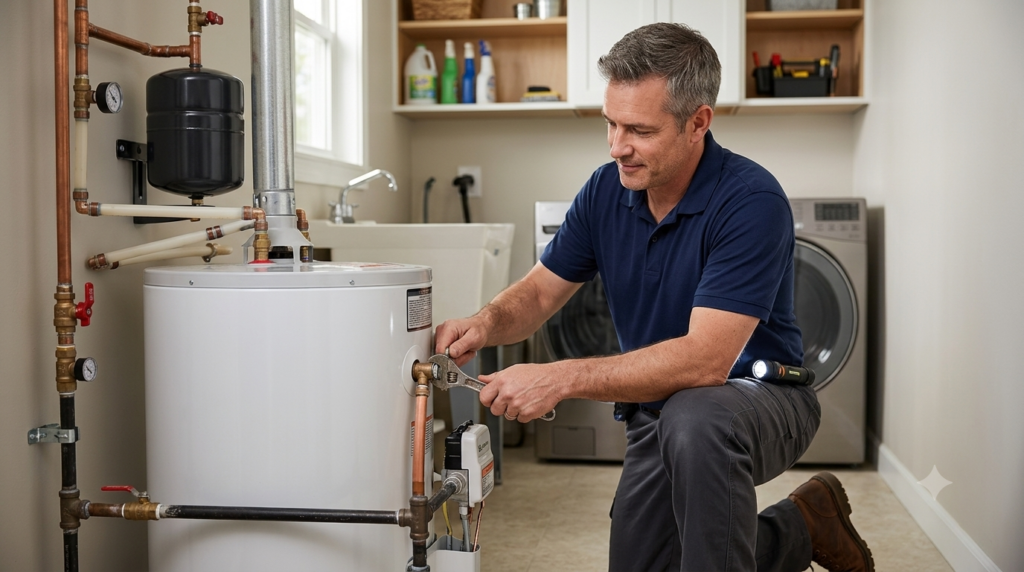
A reliable supply of hot water is something most homeowners don’t think about until something goes wrong.
When the shower suddenly turns cold, the water takes longer to heat up, or you notice water around the bottom of the tank, your water heater may be trying to tell you something.
Some water heater problems can be repaired relatively easily. Others may indicate that the unit is reaching the end of its useful life and replacement could make more sense.
Knowing the warning signs can help you deal with a problem before it leaves you without hot water or causes unnecessary damage.
Here are seven signs that your water heater may need professional attention.
1. Your Water Isn’t Getting Hot Enough
One of the most obvious signs of a water heater problem is when your water isn’t reaching the temperature it normally does.
You may notice that your shower becomes lukewarm sooner than usual, or that hot water takes much longer to arrive at your faucets.
There can be several reasons for this.
Possible Causes
A water heater that isn’t producing enough hot water could have an issue with its heating element, thermostat or another internal component.
Sediment buildup can also affect how efficiently the unit heats water.
For homes with gas water heaters, problems with the burner or gas supply can also affect performance.
If the water is consistently cooler than it should be, rather than simply being affected by unusually high demand, it is worth having the system checked.
2. You’re Running Out of Hot Water Too Quickly
Have you noticed that your household seems to be running out of hot water much faster than it used to?
This can be particularly frustrating when the first person gets a long hot shower while everyone else is left waiting for the water to heat back up.
Why Is This Happening?
A reduction in available hot water can sometimes be related to a failing component inside the water heater.
Sediment buildup can also reduce the amount of usable hot water a tank can provide.
Another possibility is that the water heater is simply no longer the right size for the household’s current needs.
If your household has grown or your hot water usage has changed significantly, the existing system may no longer be able to keep up with demand.
A professional assessment can help determine whether the problem is a repair issue or whether replacement would provide a better long term solution.
3. Your Water Heater Is Making Strange Noises
A water heater can make some noise during normal operation, but unusual or increasingly loud sounds deserve attention.
You may hear popping, rumbling, banging, or cracking sounds coming from the tank.
What Causes These Sounds?
In tank-style water heaters, sediment can settle at the bottom of the tank over time.
When the burner heats the water beneath this layer of sediment, trapped water can turn into steam and create popping or rumbling sounds.
As sediment continues to accumulate, the water heater may become less efficient and have to work harder to heat the water.
Strange noises do not necessarily mean the water heater needs to be replaced immediately, but they are a good reason to have the system inspected.
4. You Notice Water Around the Water Heater
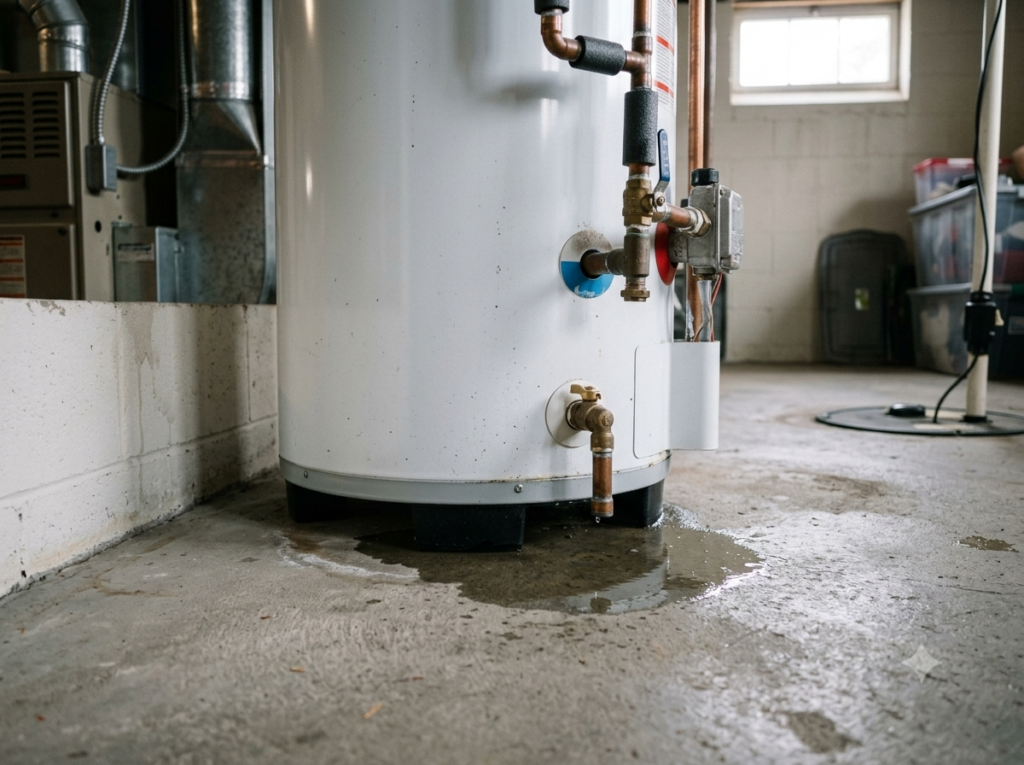
Water around the base of your water heater should never simply be ignored.
Even a small amount of water can indicate a problem that needs attention.
Where Could the Water Be Coming From?
There are several possible sources.
A connection, valve, or fitting may be leaking.
The temperature and pressure relief valve could also be releasing water.
In some cases, condensation can create moisture around the unit.
However, if the tank itself is leaking, the situation is more serious.
A storage tank can develop corrosion over time, eventually causing the tank to leak.
Once the tank itself has failed, replacement is generally necessary because the tank cannot simply be repaired in the same way as an individual component.
If you discover water around your water heater, have the source identified rather than assuming it is harmless.
5. Your Hot Water Looks Rusty or Discoloured
The appearance of your hot water can provide another clue that something may be wrong.
If hot water has a rusty, brown or unusual appearance, there could be corrosion somewhere within the water heater or plumbing system.
What Should You Look For?
Pay attention to whether the discolouration occurs only with hot water or also appears when using cold water.
If the problem is isolated to hot water, the water heater may be worth investigating.
Rust or corrosion inside an aging tank can eventually contribute to leaks and other problems.
Discoloured water can have several possible causes, however, so it should not automatically be assumed that the water heater is responsible.
If the change persists, professional assessment can help identify the source.
6. Your Water Heater Is Getting Older
Age alone does not necessarily mean a water heater needs to be replaced.
However, an aging unit may become more likely to experience problems, particularly if repairs are becoming more frequent.
Repair or Replacement?
This is where a professional assessment can be useful.
If a relatively young water heater develops a replaceable component problem, repairing it may make sense.
If an older unit is experiencing repeated problems, developing leaks or becoming increasingly inefficient, replacement may be worth considering.
The right decision depends on the condition of the unit, the nature of the problem and the cost of the repair compared with replacing the system.
Rather than replacing a water heater simply because it has reached a certain age, consider its overall condition and performance.
7. Your Energy or Utility Bills Are Increasing
A sudden or unexplained increase in energy usage can sometimes be connected to your water heater.
Heating water requires energy, and a system that is no longer operating efficiently may need to work harder or run longer to produce the same amount of hot water.
Look for Changes in Performance
An increase in energy usage does not automatically mean your water heater is the cause.
Changes in household usage, energy prices and other appliances can all affect your bills.
However, if higher energy usage occurs alongside other warning signs such as slow heating, insufficient hot water or unusual noises, it may be worth having the water heater inspected.
When Should You Repair a Water Heater?
Not every water heater problem means you need a new system.
A repair may make sense when the underlying problem is limited to a component that can be replaced or serviced.
For example, depending on the type of system and the cause of the problem, a professional may be able to address an issue involving a valve, thermostat, heating element or other component.
The condition and age of the water heater should also be considered.
If the tank itself is in good condition and the repair is relatively straightforward, repairing the existing system may be a sensible option.
When Does Water Heater Replacement Make More Sense?
There are situations where continuing to repair an aging water heater may not be the most practical choice.
Replacement may be worth considering when:
- The tank itself is leaking
- The unit has recurring problems
- Repair costs are becoming significant
- The water heater is no longer meeting household demand
- The system is becoming increasingly inefficient
- The unit is nearing the end of its useful service life
The decision should be based on the condition of the existing system rather than simply replacing it at the first sign of trouble.
A professional can help you understand your options and decide whether repair or replacement makes more sense for your home.
What You Can Check Before Calling a Plumber
There are a few basic observations you can make before arranging professional service.
- Check whether the problem affects all hot water fixtures or only one.
- Look for visible leaks around the water heater.
- Pay attention to unusual sounds.
- Notice whether the water is discoloured.
- Consider whether you are running out of hot water more quickly than you used to.
These observations can help explain what you are experiencing when you speak with a plumber.
However, avoid attempting repairs involving gas connections, electrical components or internal water heater parts yourself.
Water heaters combine water, electricity or gas, and high temperatures. Problems involving these components should be handled by an appropriately qualified professional.
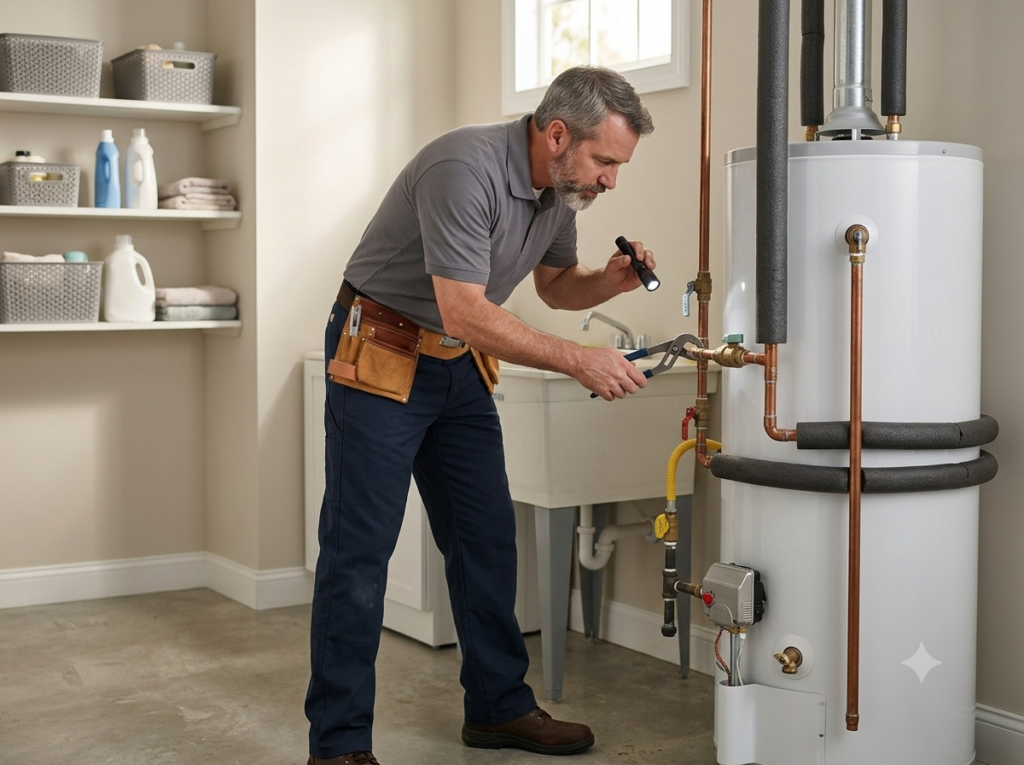
How to Extend the Life of Your Water Heater
Regular attention can help you identify developing problems and potentially extend the useful life of your system.
Pay Attention to Changes
You know how your home’s hot water normally behaves.
If you notice changes in temperature, recovery time, water appearance or noise, don’t simply ignore them.
Look for Leaks
Periodically check the area around your water heater for signs of moisture or water damage.
Early detection can help prevent a small problem from becoming a much larger one.
Consider Professional Maintenance
Depending on the type of water heater and its condition, professional maintenance may help keep the system operating properly.
A plumber can assess the system and advise you on appropriate maintenance for your particular unit.
Know Where Your Water Shutoff Is
Knowing how to shut off your home’s water supply can be valuable if a significant plumbing leak occurs.
If your water heater develops a serious leak, knowing where the appropriate shutoff is can help limit potential water damage while you arrange professional assistance.