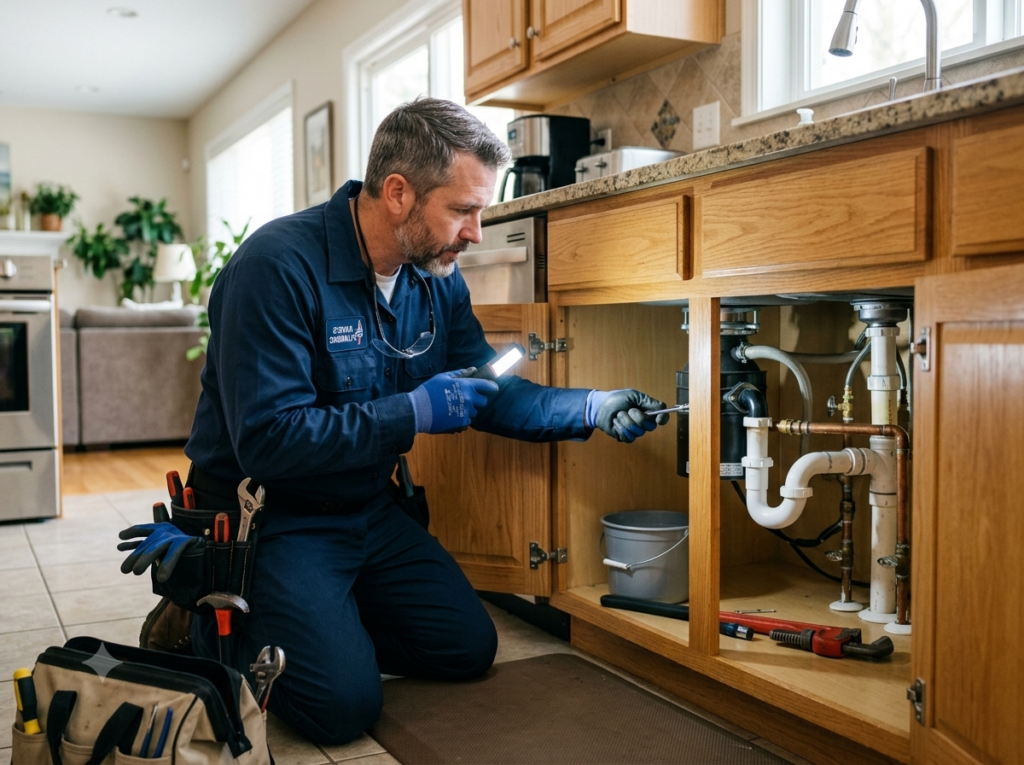
Low water pressure can turn everyday tasks into a frustrating experience. A shower that barely rinses shampoo, a kitchen faucet that takes forever to fill a pot, or several fixtures suddenly producing weak water flow can all point to different plumbing issues.
The good news is that low water pressure does not always mean you have a major plumbing problem. Sometimes the cause is simple and easy to address. In other cases, persistent or sudden pressure loss can indicate a leak, damaged pipes, or another issue that deserves professional attention.
The first step is figuring out whether the problem is limited to one fixture or affecting your entire home.
Quick Answer
Low water pressure can be caused by something as simple as a clogged faucet aerator or partially closed shutoff valve, but it can also point to leaks, aging pipes, pressure regulator problems, or issues with the home’s water supply. The first step is determining whether the problem affects one fixture or the entire house.
First, Determine How Widespread the Problem Is
Before assuming something is seriously wrong with your plumbing, check how widespread the pressure problem is.
If only one faucet or shower has low pressure, the cause may be relatively simple. A clogged aerator, mineral buildup, or a partially closed valve can restrict water flow at that particular fixture.
If several fixtures have low pressure, there may be a problem somewhere within the home’s plumbing system.
If water pressure has suddenly dropped throughout the entire house, it is worth investigating sooner rather than later. The cause could range from a problem with the home’s pressure regulator to a leak or an issue with the incoming water supply.
A simple way to narrow things down is to test several faucets and showers at different locations throughout your home.
Common Causes of Low Water Pressure
There are several reasons why your home’s water pressure may not be what it used to be.
1. Partially Closed Shutoff Valve
Your home’s main water shutoff valve controls the flow of water entering the property.
If the valve has been partially closed, perhaps following previous plumbing work, it can restrict the amount of water flowing through the system.
If you can safely access the valve, check whether it appears to be fully open. Do not force a valve that is difficult to turn, especially on an older plumbing system. Forcing an old valve can cause damage or create a leak.
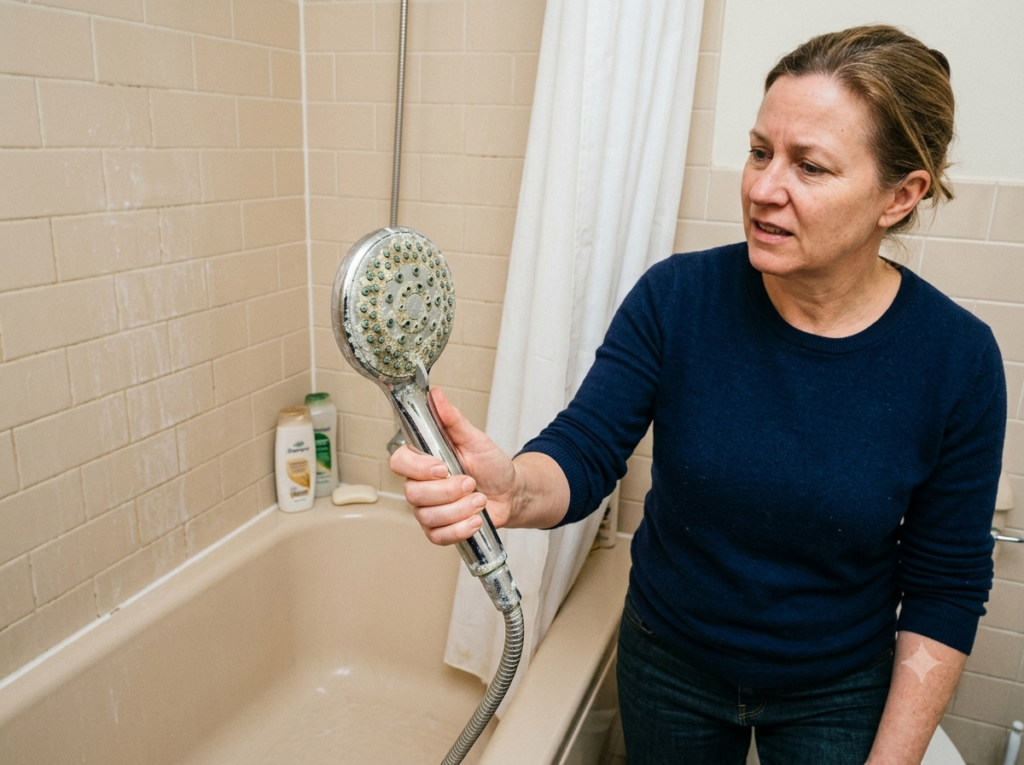
2. Clogged Faucet Aerator or Showerhead
If the problem is limited to one faucet or shower, mineral deposits and debris may be restricting the flow.
Faucet aerators and showerheads can collect mineral buildup over time, particularly in areas with harder water.
Cleaning an accessible aerator or showerhead may restore normal flow.
If cleaning does not improve the pressure, the issue may be somewhere else in the plumbing system.
3. Plumbing Leaks
A leak can affect water pressure while also causing damage to your home.
Not every plumbing leak is immediately obvious. A leak may occur behind a wall, beneath a floor, or in another area that is not easily visible.
Watch for signs such as:
- Damp or discoloured areas
- Unexplained increases in water usage
- The sound of water running when all fixtures are turned off
- Musty smells
- Areas of unusual moisture
If you suspect a leak, professional investigation is recommended.
4. Corroded or Aging Pipes
Older plumbing systems can develop corrosion, mineral buildup and internal restrictions that reduce water flow.
If your home has older plumbing and you have noticed gradually declining water pressure over time, the condition of the pipes may be part of the problem.
A professional plumber can assess the condition of accessible plumbing and help determine whether the issue is isolated or more widespread.
5. Pressure Regulator Problems
Some homes use a pressure regulating valve to control the pressure entering the plumbing system.
If the regulator is malfunctioning or wearing out, you may notice changes in water pressure throughout the home.
Because diagnosing or replacing a pressure regulator can involve working with the home’s main water supply, it is generally best handled by a qualified plumbing professional.
6. Issues With the Municipal Water Supply
Sometimes the plumbing inside your home is not the cause.
Maintenance, repairs or other issues affecting the local water supply can temporarily change water pressure.
If your neighbours are experiencing the same problem, it may be worth checking whether there is a known issue in your area before assuming the problem is inside your home.
7. Problems With a Well or Well Pump
Homes supplied by private wells can experience pressure problems related to the well system or pump.
A failing pump, pressure switch issue or other well system problem may affect water pressure throughout the property.
If your home uses a private well and the pressure has changed noticeably, professional diagnosis can help identify the source.
8. Multiple Fixtures Running at Once
Sometimes the plumbing system is working normally but demand is temporarily high.
Running a shower while a washing machine, dishwasher or other fixture is using water can reduce flow at another fixture.
If the pressure returns to normal once other fixtures stop running, the issue may simply be related to simultaneous water use.
What You Can Safely Check Yourself
Before calling a plumber, there are a few basic things you can check.
Check the Extent of the Problem
Turn on several faucets and showers throughout the house.
Does the issue affect one fixture or several?
This simple observation can provide useful information about where the problem may be occurring.
Check Accessible Shutoff Valves
If you know where your main water shutoff valve is and it is easily accessible, check that it appears fully open.
Do not force a valve that is stuck or difficult to operate.
Clean a Faucet Aerator
If only one faucet has weak flow, carefully removing and cleaning its aerator may resolve the problem.
Mineral deposits and debris can restrict the opening through which water flows.
Look for Obvious Signs of Leaks
Check accessible areas beneath sinks, around toilets, near water heaters and anywhere else you can safely inspect.
Look for moisture, staining or unusual sounds.
Do not remove walls, flooring or other structures to investigate a suspected leak yourself.
When Low Water Pressure Could Mean a Bigger Problem
Low water pressure deserves more attention when it is sudden, widespread or accompanied by other warning signs.
Consider contacting a professional if you notice:
- A sudden major drop in pressure
- Water stains or damp areas
- Unexpected increases in water usage
- Sounds of running water when fixtures are turned off
- Repeated pressure problems
- Rusty or discoloured water
- Low pressure affecting the entire property
These signs do not automatically mean you have a serious plumbing failure, but they are worth investigating before a small problem becomes more expensive to repair.
When Should You Call a Plumber?
If basic checks do not explain the problem, professional diagnosis can help determine what is actually happening.
You should consider contacting a plumber if:
- Low pressure affects multiple fixtures
- The problem keeps returning
- You suspect a leak
- You notice dampness or water damage
- Your home has older plumbing
- You experience a sudden and significant pressure change
- You have a private well and suspect a problem with the well system
A professional can assess the system and help identify whether the issue is related to a fixture, valve, pipework, pressure regulation or the incoming water supply.
How a Professional Plumber Can Diagnose Low Water Pressure
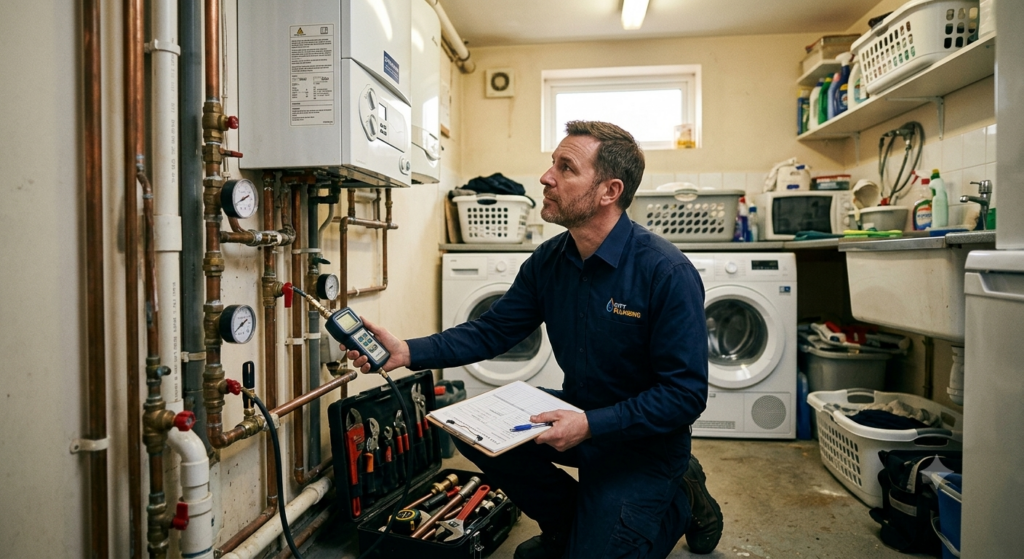
Professional diagnosis begins with understanding the symptoms.
A plumber may assess the water pressure at different points in the property, inspect accessible fixtures and valves, and look for signs that could indicate leaks or restrictions.
The goal is not simply to restore pressure temporarily. It is to understand why the pressure has changed in the first place.
Depending on the property and symptoms, the investigation may involve examining the condition of accessible plumbing, checking pressure regulation and determining whether the issue is isolated to one area or affects the wider system.
Once the cause is identified, the appropriate repair or solution can be discussed with the homeowner.
How to Prevent Water Pressure Problems
You cannot prevent every plumbing problem, but regular attention can help you identify issues before they become more serious.
Pay Attention to Changes
If your water pressure gradually changes, do not ignore it.
A noticeable change can be an early indication that something within the plumbing system needs attention.
Check for Leaks
Keep an eye out for damp areas, staining, unexplained water usage or sounds of running water.
Finding a leak early can help reduce the risk of water damage.
Maintain Fixtures
Clean faucet aerators and showerheads periodically to prevent mineral deposits from restricting water flow.
Address Small Problems Early
A minor plumbing issue can sometimes become more complicated when left unresolved.
If you repeatedly experience low pressure, recurring leaks or other unusual plumbing symptoms, consider having the issue investigated.
Low Water Pressure: When to DIY and When to Call a Professional
Having Problems With Water Pressure?
Persistent or unexplained low water pressure can make everyday life frustrating, especially when the problem affects multiple fixtures or keeps returning.
The right solution depends on what is causing the pressure loss. A professional assessment can help identify the underlying issue and determine whether a simple adjustment, repair or more extensive plumbing work is needed.
Last Plumbing has been serving homeowners and businesses in Ozaukee County and surrounding areas for more than four decades.
If you are unsure what is causing your water pressure problem, get in touch with Last Plumbing.
Frequently Asked Questions
Low pressure throughout a home can be caused by several issues, including a partially closed main valve, problems with pressure regulation, leaks, aging pipes, issues with the incoming water supply or, in homes with private wells, problems with the well system.
A sudden drop in pressure can have several causes. It may be related to a valve, leak, pressure regulator, water supply issue or another plumbing problem. If the change is significant or affects the entire property, professional investigation is recommended.
When only one faucet has low pressure, the problem may be limited to that fixture. A clogged aerator, mineral buildup or a local valve issue are possible causes.
Yes. A significant leak can affect available water pressure, although not every leak will cause an obvious pressure change. Signs such as damp areas, unexplained water usage or the sound of running water should be investigated.
Not necessarily. Some low-pressure problems are minor. However, sudden major pressure loss accompanied by signs of a leak or water damage should be addressed promptly.
Water pressure can vary between properties and water systems. If your pressure has noticeably changed from what is normal for your home, that change is often more useful to investigate than a single number.
Yes. Older pipes can develop corrosion and internal buildup that restrict water flow. If pressure has gradually declined in an older property, the condition of the plumbing may be worth having assessed.